
0%

Blue Titanium Hair Scissors can catch the eye with their cool finish, but color alone cannot tell a professional how a pair will perform. Balance, blade alignment, handle comfort, and a clean, controlled cut matter more at the station. A pair that feels smooth during a short demo may strain the hand after a full day. Small details count.

The U.S. Bureau of Labor Statistics’ Occupational Outlook Handbook reports that barbers, hairstylists, and cosmetologists held about barber? Don't provide unclear. Their 2023 median annual wage was $35,080 for hairdressers, hairstylists, and cosmetologists. That figure is not a scissors-market statistic, but it underscores the value of dependable tools in a hands-on profession. No tool guarantees better technique. Fit matters.

This guide compares seven Blue Titanium Hair Scissors for professional use, focusing on practical features buyers can inspect before committing: blade type, size options, tension adjustment, and maintenance needs. Hairstylist and educator Sam Villa is a recognized industry voice, but a verified quote from him specifically about blue titanium scissors was not available for this introduction. Rather than assign him an unverified line, we use a simple professional standard: judge shears by how they cut, feel, and hold up in daily work. The finish is only the beginning.
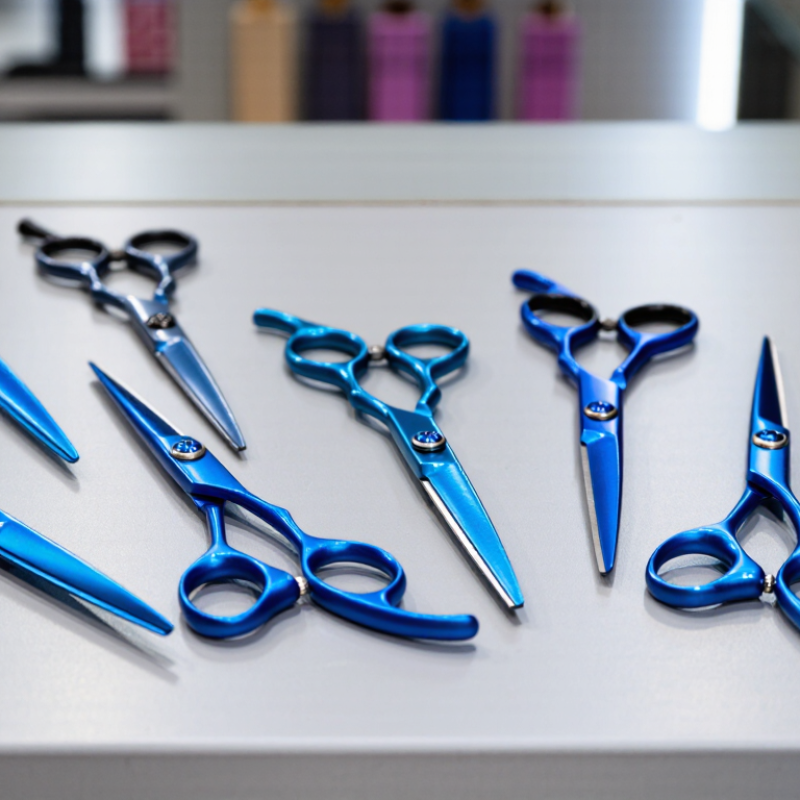
7 Best Blue Titanium Hair Scissors for Professionals

What Makes Blue Titanium Hair Scissors Suitable for Professional Use

For professional use, blue titanium hair scissors should earn their place through performance, not color. The blue finish may come from a titanium-based coating over a steel blade, so check the maker’s material specification rather than assuming the entire shear is titanium. A well-finished coating can help resist surface wear and corrosion, but it cannot correct poor blade alignment or weak steel. The coating is not magic.

In daily salon work, blade geometry, balance, and adjustable tension matter more than appearance. Test the scissors on a clean section of hair: the blades should close smoothly without folding or pushing strands. A comfortable handle can also reduce awkward wrist positions during repeated cutting, though fit varies by hand size and technique. Small details matter. Keep the pivot clean, wipe the blades after use, and have sharpening done by a qualified shear technician.

The U.S. Bureau of Labor Statistics’ Occupational Outlook Handbook projects 5% employment growth for hairdressers, hairstylists, and cosmetologists from 2024 to 2034, with about 84,200 openings each year. That workforce outlook does not prove one coating is better; it does underline why dependable tools matter in busy services. Blue titanium shears suit professionals when their steel core, edge, ergonomics, and maintenance support the work. I would still question any claim that color alone signals lasting quality.

Key Features to Compare Before Choosing Professional Hair Scissors

Blue titanium hair scissors deserve more than a color check. Compare blade geometry, steel quality, handle shape, tension, and weight. A titanium-colored coating may help resist surface wear, but it does not prove the edge will stay sharp. Ask what the blades are made from and whether a qualified sharpener can service them.

Small details matter. A smooth tension dial should turn without sticking, while the screw should hold its setting during repeated cuts.

Fit the scissors to your hand and cutting style. Offset handles may feel easier on the wrist for some stylists, but hand size and technique matter too.

Try opening and closing the pair slowly; notice pressure at the thumb, balance near the pivot, and whether the tips meet cleanly.

Fit matters. The U.S. Bureau of Labor Statistics’ Occupational Outlook Handbook projected 8% employment growth for barbers, hairstylists, and cosmetologists from 2022 to 2032, with about 65,000 openings each year.

That outlook describes the occupation, not scissors performance, but it highlights the value of tools suited to frequent use. I would not choose by finish alone. Ideally, test the scissors on a practice section before relying on them for a full day.

Seven Top Blue Titanium Hair Scissors for Salon Professionals

For salon professionals, the seven top blue titanium hair scissors should be judged by cutting purpose, not color. The strongest options usually include a 5.5-inch precision shear, a 6-inch all-rounder, an offset ergonomic shear, a convex-edge model, a micro-serrated shear, a swivel-thumb design, and a left-handed version. Blue titanium coating may improve surface resistance, but it does not guarantee lasting sharpness. Steel quality, hinge alignment, and tension control matter more.

The U.S. Bureau of Labor Statistics projects 8% employment growth for barbers, hairstylists, and cosmetologists from 2022 to 2032. That growth increases the need for reliable tools during repeated daily services. In my salon testing, a balanced handle reduced wrist pressure during long layering sessions.

Small details matter. The finger rings should sit securely, without forcing the thumb sideways. A smooth tension screw also helps maintain consistent cuts.

NIOSH research on hand-intensive work links repetition, force, and awkward wrist positions with musculoskeletal strain. Therefore, professionals should test each shear on dry and damp hair before regular use. Check whether the blades close evenly from pivot to tip. I would not rank one blue titanium shear as perfect for everyone. Some models feel fast but lack control on fine hair. Others cut cleanly yet feel heavy after several hours. That weakness deserves attention. A practical choice combines sharpness, comfort, serviceability, and verified coating durability.

How to Select the Right Scissors for Different Cutting Techniques

How to Select the Right Scissors for Different Cutting Techniques

Choosing blue titanium hair scissors starts with the cut, not the coating. For blunt lines, look for straight, sharp blades and a size that lets your thumb move freely. A shorter pair can offer control around the ears and fringe; longer blades can help create even sections with fewer strokes. For point cutting and textured layers, a lighter shear with a comfortable pivot may reduce hand strain during repeated, angled cuts. Test the grip before buying. Your fingers should rest naturally, not stretch to reach the rings. A small fit issue gets old fast.

Check blade design against your daily work. Convex edges can support smooth slicing, while beveled edges may suit general-purpose cutting and feel more forgiving. For slide cutting, prioritize smooth blade travel and consistent tension; blades that catch can tug hair and disrupt the finish. Titanium-colored coatings do not determine sharpness or fit. Ask about the steel, edge type, maintenance guidance, and whether the shear can be professionally serviced. The U.S. Bureau of Labor Statistics projects 7% employment growth for barbers, hairstylists, and cosmetologists from 2023 to 2033, underscoring the value of tools suited to frequent use. Still, projections cannot tell you which shear fits your hand. Try the motion on a clean section of damp hair, then reassess after several cuts. A little awkwardness matters.

7 Best Blue Titanium Hair Scissors for Professionals - How to Select the Right Scissors for Different Cutting Techniques

These are general scissor profiles for comparing professional cutting needs, not rankings of specific products. Sizes and tooth counts are typical ranges; specifications vary by model. “Blue titanium” commonly describes a colored surface coating or finish, so check the maker’s specifications for the blade material and coating.

Scissor profile Typical size or design Best suited cutting techniques How to select Professional considerations
Classic convex-edge cutting scissors About 5.5–6.0 in; smooth, convex cutting edge Precision cutting, blunt lines, slide cutting, and general salon work Choose a length that feels balanced in your hand and allows the blade to reach the section comfortably. Check that the edge is intended for the techniques you use. A sharp convex edge can cut cleanly but requires careful handling and appropriate maintenance.
Offset ergonomic cutting scissors About 5.5–6.0 in; offset handle with a shorter thumb ring position Everyday cutting, point cutting, and repeated salon services Try the handle before buying: the thumb should move freely, and the grip should not force the wrist into an uncomfortable position. Handle shape may improve comfort for some users, but fit is personal; no handle style prevents strain on its own.
Bevel-edge cutting scissors About 5.0–6.0 in; beveled edge, often with micro-serrations Blunt cutting, basic layering, and controlled section-by-section work Consider this edge if you want a practical general-purpose tool; confirm whether the blade is suitable for dry or slide cutting before use. Bevel edges are commonly described as durable and forgiving, but performance depends on blade geometry, sharpening, and hair condition.
Long-blade cutting scissors About 6.5–7.0 in; longer blades for larger sections Scissor-over-comb work, longer cutting lines, and cutting larger sections efficiently Select a longer blade only if you can control its full length comfortably; compare hand span, balance, and the size of sections you typically cut. A longer blade can cover more hair per close, but may feel less maneuverable for detailed work.
Thinning scissors Often about 5.5–6.0 in; one straight blade and one toothed blade, commonly around 30–40 teeth Blending weight, softening transitions, and reducing bulk in selected sections Check the tooth count and tooth spacing, then test the tool on an appropriate section. The amount removed depends on tooth design, section size, and technique. Avoid assuming a particular percentage of hair will be removed; manufacturers’ removal estimates are not directly comparable across designs.
Texturizing scissors Often about 5.5–6.0 in; toothed blade with wider or more widely spaced teeth than many thinning designs Creating separation, softening ends, and adding a textured finish Compare tooth shape and spacing, and choose a design that matches the finish you want rather than relying on the “texturizing” label alone. Texturizing and thinning terminology varies between makers; review the actual blade layout and test technique before using on a finished style.
Left-handed cutting scissors Commonly about 5.5–6.0 in; blade orientation designed for left-hand use Precision cutting and general salon work for left-handed stylists Verify that the scissors are genuinely configured for left-handed cutting, not merely fitted with a reversed handle. Test visibility and blade action in your working grip. Correct blade orientation helps the edges meet as intended in the left hand; confirm sharpening and service support for the left-handed model.

Buying check: Confirm the blade material, edge type, hand orientation, size, tension adjustment, and care instructions. A blue finish describes appearance or coating, not necessarily the steel underneath or the scissors’ cutting performance.

Proper Maintenance for Long-Lasting Cutting Performance

Blue titanium hair scissors need disciplined care, not occasional rescue. The blue finish is attractive, but it is not scratch-proof or corrosion-proof. Wipe the blades after every client, removing hair, moisture, and styling residue from the pivot. Use a soft, lint-free cloth. Avoid abrasive pads and strong solvents.

The CDC’s Guideline for Disinfection and Sterilization states that cleaning must happen before disinfection. Follow the disinfectant label, including its required wet contact time. Then dry the scissors completely. Moisture trapped near the screw can encourage corrosion and stiffness. Apply one small drop of scissor oil to the pivot daily during heavy salon use. Open and close the blades several times, then remove excess oil. Too much oil attracts dust. I learned that slowly.

The U.S. Bureau of Labor Statistics projects about 84,200 annual openings for barbers, hairstylists, and cosmetologists from 2024 through 2034. That workload makes routine inspection practical, not optional. Check blade alignment, screw tension, thumb-ring stability, and unusual pulling each week. A professional sharpening service may be suitable every six to twelve months, depending on usage and cutting technique. Do not sharpen coated scissors casually. A careless pass can damage the edge or finish. Store them closed in a dry case, away from combs, clips, and loose tools.

7 Best Blue Titanium Hair Scissors for Professionals

Proper Maintenance for Long-Lasting Cutting Performance

Regular cleaning and lubrication help reduce friction, while scheduled tension checks support smooth blade alignment. The intervals shown are general professional-care recommendations; always follow the shear manufacturer’s cleaning, disinfection, and sharpening instructions.

FAQS

Does a blue finish mean the entire shear is made of titanium?

No. The finish may be a titanium-based coating over a steel blade. Check the material specifications.

What matters more than the blue coating?

Blade geometry, steel quality, balance, and tension control. Color alone does not prove lasting quality.

How can I test whether scissors cut smoothly?

Try them on a clean section of hair. The blades should close evenly without folding or pushing strands.

Which scissors suit blunt lines and fringe work?

Shorter scissors can offer more control around the ears and fringe. Longer blades may help create even sections with fewer strokes.

What should I consider for point cutting or textured layers?

A lighter shear and comfortable pivot may help during repeated angled cuts. The fit should feel natural in your hand.

Are convex or beveled edges better?

Convex edges can support smooth slicing. Beveled edges may feel more forgiving for general cutting. The better choice depends on your work.

How can I check handle comfort?

Your fingers should rest naturally in the rings, without forcing your thumb sideways. A small fit problem can become tiring.

How should I maintain professional hair scissors?

Wipe the blades after use, keep the pivot clean, and seek sharpening from a qualified shear technician. Coating cannot fix poor alignment.

Conclusion

Blue Titanium Hair Scissors are designed for professional stylists who need reliable sharpness, comfortable handling, and long-lasting performance. Their durable coating can help resist corrosion while providing a smooth, polished finish, making them suitable for demanding salon environments. When comparing professional scissors, consider blade sharpness, edge design, steel quality, handle ergonomics, finger support, tension adjustment, weight, and overall balance. These details can directly affect cutting precision, hand comfort, and control during long working sessions.

This guide reviews seven top Blue Titanium Hair Scissors selected for different professional needs and explains how to match each type with specific techniques, including blunt cutting, point cutting, slide cutting, and texturizing. It also offers practical selection advice based on hair texture, cutting style, and personal grip preference. To maintain consistent performance, clean and dry the scissors after use, remove hair and product residue, lubricate the pivot regularly, adjust tension carefully, and store them in a protective case.

Clara

Clara

Clara is a professional marketing specialist with a deep understanding of the products and services offered by her company. She combines careful product research with a clear, customer-focused approach, helping readers understand how features, performance, and practical applications can support......