
0%

The 2026 market for Wood Handle Straight Razors reflects a wider shift toward durable, repairable grooming tools. Grand View Research valued the global men’s grooming products market at approximately US$85.7 billion in 2023. Its analysis also projects continued growth through 2030, supported by premium products and rising personal-care awareness. These figures do not measure straight razors alone. Still, they show the commercial space surrounding quality shaving equipment.

A well-made razor feels different in the hand. Its wooden handle may show visible grain, slight color variation, and a warmer grip than molded plastic. However, appearance cannot replace engineering. Buyers should examine blade steel, tang construction, balance, handle sealing, packaging, and sharpening support. The Forest Stewardship Council’s certification system can also help purchasers evaluate responsibly sourced wood, although certification details require careful checking. Marketing language is not proof.

This guide compares the 2026 Best Wood Handle Straight Razors for Global Buyers through practical buying criteria. It considers shaving control, maintenance demands, replacement costs, export packaging, and supplier transparency. Professional experience suggests that beginners often underestimate stropping technique. Small errors can damage an edge quickly. I have also found that “premium” handles sometimes hide ordinary materials. That deserves skepticism.

Euromonitor International’s beauty and personal-care research continues to identify premiumization, sustainability, and online research as important category influences. Those trends matter here, but they should not dictate every purchase. A beautiful razor can still feel unbalanced. A modest model may perform better. The recommendations ahead aim to separate durable craftsmanship from attractive presentation, while recognizing that comfort and technique remain personal.
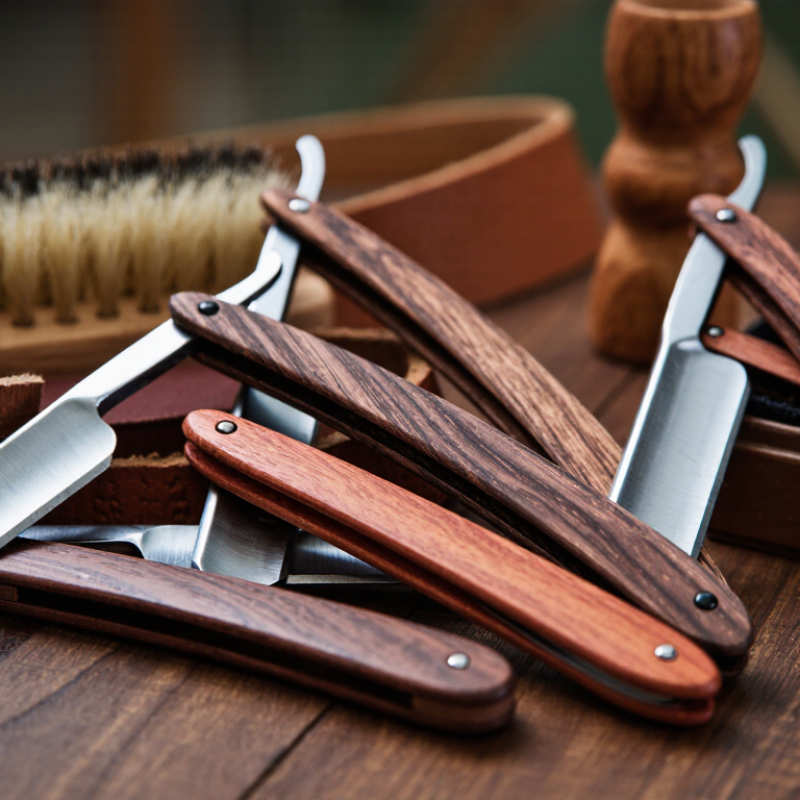
2026 Best Wood Handle Straight Razors for Global Buyers

Wood Handle Straight Razors: Materials, Design, and Craftsmanship

Wood Handle Straight Razors: Materials, Design, and Craftsmanship

A wood handle changes how a straight razor feels in the hand. Walnut offers warm grain and moderate density. Maple feels harder and cleaner. Stabilized wood can reduce movement, but it may look less natural. The U.S. Forest Products Laboratory’s Wood Handbook, FPL-GTR-282, notes that wood moisture content responds to surrounding humidity. At 20°C and 50% relative humidity, many species reach about 8% moisture content. This matters. A poorly sealed handle may swell, shrink, or develop small cracks.

Good design balances weight, grip, and hygiene. A narrow handle can improve control around the jawline. A slightly rounded edge prevents pressure points during longer use. Pin alignment should feel precise, not decorative. The blade should open smoothly and remain centered between the scales. Small details often reveal workshop discipline. Yet perfect symmetry is not always proof of quality. Handmade wood may show minor grain variation, and that is not automatically a defect.

Material sourcing also deserves scrutiny. The FAO Global Forest Resources Assessment 2020 reports that forests cover about 31% of global land area. Buyers should ask for species identification and responsible sourcing evidence. Finish quality matters in humid or dry regions. A sealed surface helps, but it cannot replace careful drying and storage. I would still inspect the pivot, end grain, and handle balance before purchase. Packaging claims can sound convincing. They are not performance tests.

How to Compare Blade Quality, Balance, and Handle Ergonomics

For global buyers, a wood handle straight razor should be judged by more than its appearance. Blade quality begins with consistent steel, an even grind, and a clean, centered edge. Hold the blade under a bright lamp. Uneven reflections may reveal warping or rough finishing. The spine should meet the scales smoothly, without sharp gaps or loose movement. A reliable seller should provide measurable details, such as blade width, steel type, and honing condition.

Balance affects control during each stroke. Place one finger near the pivot and let the razor rest naturally. If the blade drops heavily, the handle may be too light. If the handle dominates, delicate adjustments become tiring. Wood can feel warm and secure, but its density varies. My own preference has changed after using heavier razors; comfort mattered more than expected. Still, personal technique can distort the comparison.

Tips: Check the pivot tension before buying. Open and close the razor slowly. The blade should move smoothly, not swing freely. Examine the handle for sealed grain, even pins, and rounded edges. Ask about moisture protection, especially when importing to humid regions. A small flaw may not affect shaving, but it can become annoying over time. Test balance with dry hands, because wet fingers change grip pressure. Keep the decision practical. Beautiful wood is not automatically ergonomic.

2026 Best Wood Handle Straight Razors for Global Buyers

Reference comparison of blade quality, balance, and handle ergonomics

Scores use a 1–10 buyer reference scale. Blade quality considers edge stability and sharpening ease; balance reflects controllability around the pivot; handle ergonomics considers grip security, moisture resistance, and comfort. A 6/8-inch half-hollow configuration provides the most balanced all-purpose profile, while a 5/8-inch full-hollow blade is lighter and more agile.

Best Wood Handle Straight Razors for Different Shaving Preferences

2026 Best Wood Handle Straight Razors for Global Buyers

Wood handle straight razors suit different shaving preferences, but comfort depends on balance more than appearance. A 5/8-inch blade usually feels controlled for beginners and smaller faces. Larger 6/8-inch blades remove heavier stubble faster, though they may feel less agile around the nose.

Handle material changes the experience. Walnut feels warm and stable, while lighter wood can reduce hand fatigue during longer shaves. Seek smooth finishing, even grain, and a secure tang. A well-fitted handle should not flex when lightly opened and closed. I once preferred a heavier razor, but extended testing changed my view. Excess weight can reduce control on sensitive areas. That detail is easy to overlook.

Tips: Choose a narrow blade for precision and a rounded point for safer maneuvering. Keep the wooden handle dry after rinsing. Wipe it immediately, especially in humid climates. Use a clean, dry storage space. Never leave the razor beside a wet sink. Beginners should practice with short strokes and light pressure. Skin preparation matters too. Warm water and a mild, unscented cream can reduce pulling. Even experienced users sometimes press too firmly when the edge feels dull. That habit deserves honest correction. A reliable razor should arrive with consistent alignment, comfortable balance, and clear care guidance. Raw beauty is not enough.

2026 Best Wood Handle Straight Razors for Global Buyers - Best Wood Handle Straight Razors for Different Shaving Preferences

Configuration Recommended Preference Blade Size Blade Material Handle Wood Approx. Weight Balance Character Maintenance Level Best For
Compact Beginner Controlled, low-risk learning 4/8 in. (about 12.7 mm) Stainless steel Maple 55–70 g Neutral to slightly handle-heavy Low to moderate New users, smaller hands, travel kits
Everyday Balanced General-purpose shaving 5/8 in. (about 15.9 mm) Carbon steel Walnut 65–85 g Near-neutral Moderate; dry after use Most face shapes and daily routines
Wide-Blade Efficient Fewer passes and quicker coverage 6/8 in. (about 19.1 mm) Carbon steel Olive wood 75–95 g Blade-forward Moderate to high Coarse or dense beard growth
Fine-Detail Narrow Precision around facial hair 3/8 in. (about 9.5 mm) Stainless steel Beech 50–65 g Light and maneuverable Low to moderate Moustache lines, sideburns, and edging
Traditional Carbon Classic honing and stropping feel 5/8 in. (about 15.9 mm) High-carbon steel Ebony 70–90 g Balanced to blade-forward High; requires rust prevention Experienced traditional wet shavers
Sensitive-Skin Light Gentle pressure and careful control 5/8 in. (about 15.9 mm) Stainless steel Stabilized birch 60–78 g Neutral and easy to steer Low to moderate Sensitive skin and light-to-medium stubble
Long-Reach Professional Large hands and extended grip 6/8–7/8 in. (about 19.1–22.2 mm) Carbon steel Rosewood 80–105 g Blade-forward with extended reach High Experienced users with heavy beard coverage
Travel-Durable Humidity resistance and easy care 5/8 in. (about 15.9 mm) Stainless steel Sealed walnut 65–85 g Neutral Low; wipe and dry after use Frequent travelers and humid climates

Specifications are representative ranges for commonly available wood-handle straight-razor configurations. Actual weight, balance, handle dimensions, blade grind, and wood density vary by construction. Carbon-steel blades require thorough drying and a light protective oil to help prevent corrosion.

Care, Sharpening, and Storage for Long-Term Razor Performance

2026 Best Wood Handle Straight Razors for Global Buyers

A wood handle straight razor needs steady care from its first use. Rinse the blade with lukewarm water, then dry it completely with a soft cloth. Avoid leaving water near the handle or pivot. Wood absorbs moisture, even when it looks sealed. In humid climates, store the razor outside the bathroom. In dry climates, inspect the handle for small cracks or raised grain. A tiny amount of suitable wood conditioner can help, but excessive oil may soften certain finishes.

Sharpening requires patience and a consistent technique. Use a fine honing stone only when stropping no longer restores smooth cutting. Keep the blade flat and maintain a controlled angle during each pass. Uneven pressure can create a dull section or damage the edge. I once rushed this step and removed more metal than necessary. That mistake taught me to test the edge gradually. A leather strop should be used before shaving, with light pressure and slow movements. Never force a blade across the strop.

Store the razor open and fully dry. Good airflow matters. A ventilated case protects the edge better than a sealed, damp container. Keep the blade away from cosmetics, salt, and other corrosive residues. Check the handle, pins, and edge every few weeks. Small maintenance is easier. It is tempting to sharpen too often, but restraint usually preserves performance.

Buying Considerations for Global Customers in 2026

2026 Best Wood Handle Straight Razors for Global Buyers

Buying Considerations for Global Customers in 2026

A wood handle straight razor can feel warm, balanced, and precise in daily use. However, global buyers should judge more than appearance. Choose a handle with smooth finishing, firm scales, and no visible cracks near the pivot. Dense hardwood usually resists moisture better, but every piece has natural variation. That is part of its appeal. It can also become a weakness if storage is careless.

Blade quality matters equally. Look for corrosion-resistant steel, consistent grinding, and a secure connection between the blade and handle. A sharp edge is not automatically a good edge. It should support controlled shaving after proper stropping and maintenance. Buyers should review product dimensions, total weight, and included accessories before ordering. Small differences can change comfort significantly.

Tips: Confirm shipping coverage, return terms, and local import requirements before payment. Ask sellers how the razor is packaged against impact and humidity. Store it dry, wipe the blade after use, and avoid leaving it in a closed bathroom. Wood may darken or develop minor marks over time. That is normal, though disappointing for buyers expecting a perfect finish. Responsible sellers should provide clear material details, care guidance, and realistic photographs. Independent reviews can help, but personal skin sensitivity and shaving technique still affect the final experience.

FAQS

What blade size suits a beginner?

A 5/8-inch blade usually offers controlled handling. It feels manageable around smaller faces and the nose. Start gently. Larger blades remove heavy stubble faster but may feel less agile.

How does the wooden handle affect shaving comfort?

Walnut feels warm and stable, while lighter wood may reduce hand fatigue. Smooth finishing and secure scales matter more than appearance. A heavy handle once seemed better to me, but longer testing changed my view.

What blade shape helps with precise shaving?

A narrow blade supports detailed work around the nose and jawline. A rounded point allows safer maneuvering. Precision improves with short strokes and light pressure.

How should I prepare my skin?

Rinse with warm water and use a mild, unscented cream. This can reduce pulling on dry or coarse stubble. Do not rush. Pressing harder is usually not the answer.

How should I clean and dry the razor?

Rinse the blade with lukewarm water after shaving. Dry it completely with a soft cloth. Keep water away from the handle and pivot. Never leave it beside a wet sink.

Where should I store a wood handle straight razor?

Store it open, fully dry, and in a ventilated space. A closed, damp container can trap moisture. In humid climates, keep it outside the bathroom. Good airflow helps.

When should the blade be stropped or sharpened?

Use a leather strop before shaving, with light pressure and slow movements. Sharpen only when stropping no longer restores smooth cutting. Too much sharpening removes useful metal. I learned that mistake slowly.

What should global buyers check before ordering?

Review the blade size, total weight, handle condition, and included accessories. Check shipping coverage, return terms, and local import requirements. Ask about protective packaging. Realistic photographs help, but they cannot show every grain variation.

How can I inspect quality after delivery?

Check the edge, pins, handle, and blade alignment. The handle should not flex during gentle opening and closing. Look for cracks near the pivot. Natural marks may appear, and perfection is not guaranteed.

Conclusion

Wood Handle Straight Razors combine traditional craftsmanship with practical shaving performance, making them appealing to both experienced users and newcomers in 2026. This guide examines how wood species, protective finishes, blade construction, grind quality, balance, and handle ergonomics influence comfort and control. It also explains how to compare razors for different preferences, from gentle daily shaving to closer, more precise results. A well-designed razor should feel stable in the hand, align comfortably with the face, and provide a smooth cutting edge without unnecessary weight or pressure.

Long-term performance depends on proper care. Users should dry the razor thoroughly after each shave, protect the wood from prolonged moisture, sharpen and strop the blade correctly, and store it in a ventilated, secure place. Global buyers should also consider dimensions, shipping conditions, maintenance requirements, material durability, seller communication, return policies, and local import rules. By evaluating these factors together, shoppers can select Wood Handle Straight Razors that offer dependable function, comfortable handling, and lasting value.

Willowayne

Willowayne

Willowayne is a professional marketing specialist with a strong understanding of the company’s products and the needs of the customers who use them. Combining product knowledge with clear, practical communication, Willowayne helps readers understand key features, compare suitable options, and make......