
No matching category. Contact our team for custom tool development.
China’s hair-tool sector serves salons, barbers, and distributors seeking dependable cutting performance. Hair Thinning Shears are a specialized tool, not simply a smaller version of standard scissors. Their tooth count, blade alignment, tension, and handle balance affect how much hair each pass removes. Small details matter.
Demand for professional hair services provides useful context. Grand View Research estimated the global hair care market at USD 106.9 billion in 2024 and projected an 8.1% compound annual growth rate from 2025 to 2030. That broad category includes products beyond salon tools, so it should not be mistaken for a thinning-shear market forecast. Still, it signals a sizable, changing hair-care industry in which professional equipment remains relevant.
This guide to China’s top 10 Hair Thinning Shears manufacturers for 2026 is intended to help buyers compare suppliers with practical criteria. These include material specifications, finishing consistency, customization options, quality-control processes, and export experience. A polished product photo cannot prove edge durability or consistent tooth spacing. Ask for clear specifications and, where possible, sample shears before placing a larger order. Supplier information can change, too; a ranking is a starting point, not a substitute for due diligence.
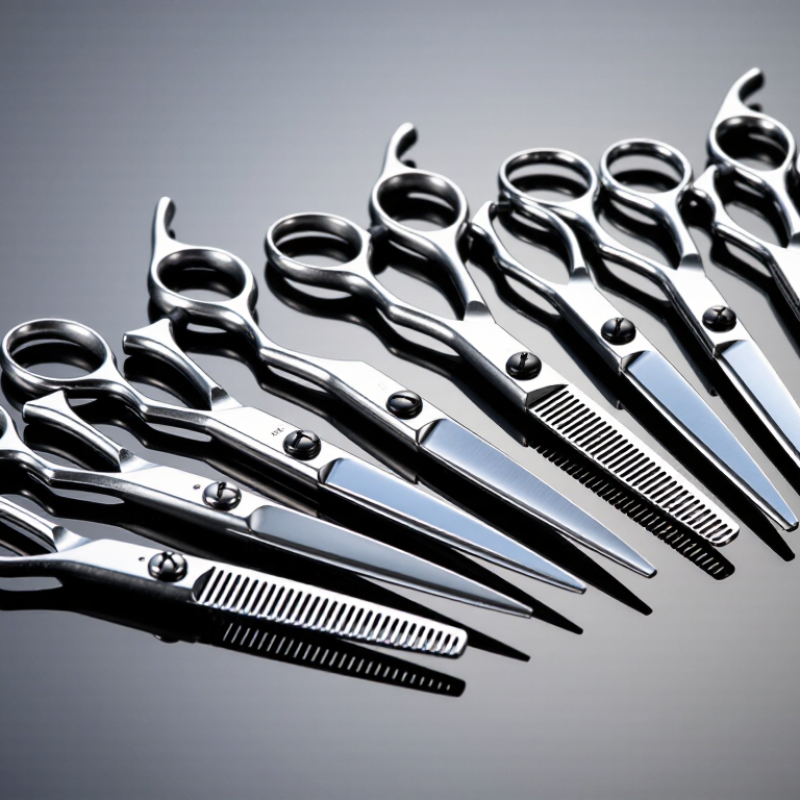
A thinning shear removes selected strands while leaving neighboring hair intact. Its toothed blade catches part of a section; the opposing edge cuts those captured strands. Many salon models measure about 6–7 inches overall and carry 20–40 teeth. These are common working ranges, not universal standards. Small details matter. Tooth spacing, depth, and shape affect how much hair comes away with each closure. A 30-tooth shear with deep teeth may remove more bulk than a 30-tooth model with shallow teeth. The count alone does not tell the whole story.
For control, stylists often work on a small, dry section and close the shear once, then check the result in natural light. Repeated cuts in one spot can leave visible gaps, especially on fine hair. The U.S. Bureau of Labor Statistics projects 5% employment growth for barbers, hairstylists, and cosmetologists from 2023 to 2033, with about 89,400 openings annually. This occupational outlook is useful context for tool use, though it does not measure thinning-shear sales. One practical caveat: stated size may refer to total shear length, not the cutting blade. Confirm the measurement before comparing specifications. That distinction is easy to miss.
A credible 2026 ranking of hair thinning shears manufacturers should look beyond catalog size. Production capacity matters, but headline output can hide bottlenecks. Buyers should compare monthly capacity with actual order volumes, lead times, and the ability to repeat a specification across production runs. Ask how steel is sourced, how blades are ground, and whether polishing and assembly happen under documented procedures. Details matter.
Export experience offers another practical signal. Manufacturers serving several overseas markets may understand packaging, shipping schedules, and buyer communication better. Still, export reach alone does not prove consistent performance. Request recent shipment records or references where available, and check whether sample and bulk orders follow the same specifications. Small differences in tooth spacing can affect blending and cutting feel.
Quality control should be assessed through observable checks, not broad claims. A useful process can include incoming steel inspection, hardness testing, alignment checks, smooth opening and closing, and final inspection under bright light. Ask how defects are recorded and what happens when a batch fails. Watch the details. Ranking data also has limits: factory capacity changes, and third-party verification may be incomplete. A transparent scoring method should disclose its evidence and note uncertainty, rather than present every position as exact. Samples deserve hands-on testing; a polished report cannot replace them.
China’s thinning-shear suppliers are concentrated in established metalworking areas, including Yangjiang in Guangdong and Zhangjiagang in Jiangsu. Their catalogues commonly pair thinning shears with straight, curved, and texturizing shears. Some factories also offer combs, cases, and sharpening services. Product photos alone reveal little. Ask for steel grade, blade hardness, tooth count, tension-system options, and sample tolerances.
OEM capabilities vary. Typical services include private-label engraving, handle finish selection, packaging design, and custom tooth patterns. Request a sample set and written inspection criteria before discussing volume. Check cutting smoothness on dry hair and confirm that paired blades meet evenly. Small flaws matter. One concern: supplier listings may blur the difference between a trading company and a factory.
Market figures offer context, not proof of shear demand. Grand View Research estimated the global hair-care market at USD 99.52 billion in 2023 and projected USD 213.47 billion by 2032. That broader category includes many products beyond salon tools. ITC Trade Map classifies scissors and shears under HS 8213, a category that does not isolate thinning shears. Buyers should therefore compare factory location, product range, OEM process, sample quality, and inspection records rather than treating broad trade totals as direct evidence of demand.
For 2026 hair-thinning shears, 440C stainless steel is a useful benchmark, not proof of quality by itself. ASTM A276/A276M lists 440C with 16–18% chromium and 0.95–1.20% carbon. Those alloying levels support corrosion resistance and high hardness after suitable heat treatment. The ASM Handbook’s steel heat-treatment data also underline a practical point: results depend on the full heat-treatment cycle, not the grade name alone. The 58–62 HRC range is a common manufacturing target, but it is not a guarantee for every finished shear.
Not quite that simple.
Buyers should request hardness test records and verify the method against ASTM E18, which covers Rockwell hardness testing. Ask whether readings come from representative finished blades or separate test coupons. That distinction matters. A blade can meet a target at one spot yet vary elsewhere, especially near the cutting edge. Inspect the pivot, edge alignment, and cutting feel alongside the certificate; hardness alone cannot predict smooth thinning or long-term edge retention.
One useful benchmark is repeatability across sampled units. If a supplier reports only a single best reading, ask for the range and sampling details. The extra check may feel fussy, but it catches weak process control.
China’s hair thinning shear market offers many options, but a catalog alone cannot confirm cutting performance. Compare tooth shape, spacing, and tooth count against the texture you usually work with. Fine, closely spaced teeth may leave a softer finish, while wider spacing can remove more hair per closure. Ask suppliers for clear close-up photos and sample shears. Test them on a mannequin head or hair swatch before ordering in volume. Small differences matter.
A stated cutting ratio of 15–35% is a useful starting point, not a universal result. Hair density, section size, and cutting angle all affect how much hair is removed. Request the method used to calculate the ratio, then check it with repeated cuts on a consistent sample. Ergonomics deserve the same hands-on attention: hold the shears for several minutes and notice thumb pressure, balance, and handle comfort. A spec sheet cannot reveal wrist strain.
Tips: Ask about blade adjustment, replacement parts, and service response times before purchase. Confirm what the warranty covers and how a repair request is handled. Keep your sample notes; comparing them later can expose a supplier mismatch, though the test may not perfectly reflect salon work.
Its toothed blade catches selected strands, while the opposing edge cuts them. Neighboring hair remains mostly intact. Results can vary.
Many salon models measure about 6–7 inches overall and have 20–40 teeth. Overall length may not equal blade length. Check the specification.
No. Tooth spacing, depth, and shape also matter. A deep-toothed 30-tooth shear may remove more bulk than a shallow-toothed one. Count is only part of the picture.
Work on a small, dry section. Close the shear once, then inspect the hair in natural light. Repeated cuts in one spot can leave gaps, especially on fine hair. Small flaws matter.
Compare stated capacity with order volumes and lead times. Ask about steel sourcing, blade grinding, polishing, assembly, and documented procedures. Capacity claims can hide bottlenecks.
Look for steel inspection, hardness tests, blade alignment checks, and smooth opening and closing. Ask how defects are recorded and handled. These checks help, but they are not a guarantee.
Options can include private-label engraving, handle finishes, packaging design, and custom tooth patterns. Request samples and written inspection criteria before discussing a large order. I may be overvaluing paperwork; samples can reveal flaws a report misses.
Export experience may indicate familiarity with shipping and communication, but it does not prove consistent quality. Broad hair-care market figures include many products beyond salon shears. Trade classifications also do not isolate thinning shears.
This guide examines how Hair Thinning Shears are designed and made, from typical 6–7-inch blades to tooth counts commonly ranging from 20 to 40. It explains how tooth shape and spacing affect texture removal, blending, and control, while outlining practical criteria for evaluating Chinese manufacturers in 2026. These include production capacity, export experience, quality-control procedures, product range, and the ability to support custom specifications and OEM orders.
The article also reviews common manufacturing benchmarks, including 440C stainless steel and a typical hardness range of 58–62 HRC, while noting that performance depends on overall design and workmanship. For buyers, it offers guidance on choosing tooth designs, comparing cutting ratios—often around 15–35%—and assessing handle ergonomics, finishing quality, and after-sales support. Together, these points provide a clear framework for comparing suppliers and selecting shears suited to professional or personal use.