
Choosing the right Pet Grooming Shears can change a grooming session from stressful to controlled. The difference appears in small details: a smooth hinge, balanced handles, sharp blades, and a comfortable grip. A professional groomer may use several shear types, but beginners often buy one pair and expect it to do everything. That approach sounds practical. It is not always effective.
This guide explains how to compare straight, curved, thinning, and chunker shears for different coat textures and grooming tasks. Straight shears can create clean lines around the body and legs. Curved shears help shape rounded areas, such as paws or heads. Thinning shears soften harsh edges without removing an obvious patch of hair. Chunkers blend heavier coats more quickly, though they require careful control.
Comfort matters as much as cutting performance. During long sessions, a poorly balanced shear can strain the wrist and cause uneven trimming. Look for adjustable tension, quiet movement, finger rests, and blades suited to your experience. Stainless steel may offer durability, but construction quality varies between manufacturers. Price alone proves little. A costly shear can still feel wrong in your hand.
Real grooming experience also reveals an uncomfortable truth: even excellent tools cannot replace training. Practice on manageable sections, check the coat repeatedly, and stop when the animal becomes anxious. Safety comes before speed. Veterinary and professional grooming guidance should support your decisions, especially when working near eyes, ears, or sensitive skin. The best choice is personal, evidence-informed, and willing to change after honest reflection.
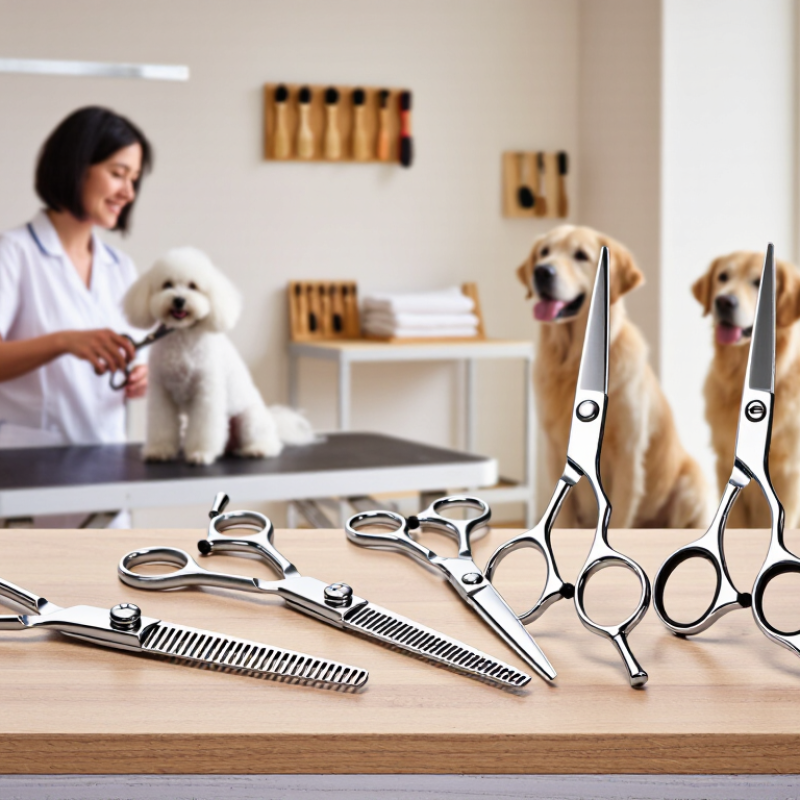
Choosing the best pet grooming shears starts with understanding their main types, not chasing the sharpest edge. The APPA 2023–2024 National Pet Owners Survey reports that 66% of U.S. households own a pet. FEDIAF’s 2024 facts report estimates 139 million European households share life with pets. More owners may attempt home grooming, but coat texture and handling skill still matter.
Straight shears create clean lines on legs, backs, and tails. Curved shears follow rounded areas, such as a bichon’s head or a cocker spaniel’s hindquarters. Thinning shears remove bulk and soften harsh transitions. Chunkers blend more aggressively, so inexperienced hands should use them slowly. Small detail shears help around paws and facial edges. Rounded tips offer extra protection, though they do not make careless handling safe.
Check the blade length against your hand. A 6- to 7-inch shear often offers control for beginners. Hold the tool lightly, and pause when the coat pulls. That pause matters. Professional groomers also inspect tension, finger rings, and wrist comfort before extended work. The American Pet Products Association links grooming with broader pet-care spending, but spending data cannot measure technique. I once favored a heavier shear because it felt powerful; after several minutes, my wrist disagreed. A quieter, lighter tool may produce better work. Practice on stable sections first, and reassess your choice after real sessions.
| Shear Type | Blade Design | Typical Tooth Count or Edge | Best Uses | Suitable Coat Types | Main Advantages | Limitations and Safety Notes | Recommended Skill Level |
|---|---|---|---|---|---|---|---|
| Straight Shears | Two straight, sharpened blades with either a convex or beveled edge. | Solid cutting edge; common working lengths are approximately 5–8 inches. | Creating clean lines, trimming the body, shaping legs, and finishing tails. | Most coat types Curly coats Silky coats | Versatile and precise; suitable for general trimming and detailed outline work. | Requires careful control around the face, feet, ears, and skin folds. Longer blades can be less maneuverable. | Beginner to professional |
| Curved Shears | Blades follow a gentle arc, allowing the cut to follow rounded body contours. | Solid cutting edge; commonly available in lengths of about 6–10 inches. | Rounding heads, shaping feet, trimming hindquarters, and sculpting curved profiles. | Curly coats Thick coats Double coats | Helps produce rounded shapes with fewer visible angular transitions. | The curved edge can remove more hair than expected if the angle is changed during the stroke. Use extra care near the eyes and skin. | Intermediate to professional |
| Chunker Shears | Wide, spaced teeth with a larger cutting profile than traditional blending shears. | Usually about 9–24 teeth, depending on the model and tooth spacing. | Quickly softening harsh lines, shaping furnishings, and blending heavy transitions. | Thick coats Curly coats Long furnishings | Removes more hair per cut than fine-tooth blending shears while leaving a softer finish than straight shears. | Can create noticeable gaps or remove too much hair when used repeatedly in one area. Avoid cutting tangled or matted hair without prior preparation. | Intermediate to professional |
| Blending or Thinning Shears | One solid blade paired with one toothed blade; designed to reduce bulk and soften transitions. | Common configurations range from approximately 20–46 teeth, with higher counts generally producing a finer blend. | Blending clipper lines, reducing bulk, and softening the boundary between trimmed and untrimmed areas. | Double coats Thick coats Silky coats | Creates a gradual transition and can correct minor unevenness without a strong blunt line. | Repeated strokes may shorten or thin the coat excessively. The final result depends on tooth spacing, coat condition, and cutting technique. | Intermediate to professional |
| Fine-Tooth Blenders | One straight blade and one blade with closely spaced, fine teeth. | Often approximately 30–50 teeth, although tooth count varies by design. | Subtle finishing, polishing transitions, and reducing small surface irregularities. | Fine coats Silky coats Partially curly coats | Provides a softer, more gradual finish than wider-tooth chunkers. | Less effective on dense, dirty, or heavily matted coats. Several light passes are safer than one aggressive pass. | Intermediate to professional |
| Texturizing Shears | Toothed blades designed to remove selected hair while preserving a textured appearance. | Tooth counts and spacing vary widely; many designs have more widely separated teeth than fine blenders. | Removing excess weight, controlling a bulky outline, and maintaining a natural-looking finish. | Dense coats Layered coats Decorative furnishings | Can reduce bulk without leaving the distinctly smooth edge produced by a solid blade. | Results are less predictable on thin coats. Avoid using them close to the skin or on areas where coat density is already low. | Advanced |
| Ball-Tip or Safety-Tip Shears | Rounded tips designed to reduce the risk of a sharp point contacting the skin. | Usually a solid straight or curved cutting edge; the safety feature is the tip shape rather than the tooth count. | Detail trimming around eyes, paws, ears, and other sensitive areas when appropriate handling is possible. | Most coat types | Rounded tips provide an additional safety feature for delicate areas and less experienced users. | They do not eliminate injury risk. Keep the blades parallel to the skin, work slowly, and stop if the pet moves unexpectedly. | Beginner to professional |
| Small Detail Shears | Compact straight or curved blades designed for controlled, localized trimming. | Common blade lengths are approximately 3.5–5 inches. | Paw pads, corners, small facial areas, ear edges, and precision touch-ups. | Fine coats Small areas All coat types | Offers greater control in confined areas and is easier to position than a long shear. | Small blades are inefficient for large sections of coat. Use only when the animal is calm and securely positioned. | Beginner to professional |
| Left-Handed Shears | Blade orientation and handle arrangement are designed for left-handed operation. | Available in straight, curved, chunker, blending, and other configurations. | Any grooming task when the user naturally cuts with the left hand. | Depends on blade type | Improves comfort, visibility, and cutting control for left-handed groomers. | Using right-handed shears in the left hand can reduce cutting efficiency and increase hand strain. Select the correct orientation. | Beginner to professional |
Straight shears create clean lines on legs, backs, and tails. They work well on broad, flat areas. Keep the coat clean and dry.
Curved shears follow rounded areas, such as cheeks, heads, and hindquarters. They can shape smooth contours more easily. Move slowly around curves.
Thinning shears reduce bulk and soften harsh transitions. Chunkers blend more aggressively. Use either tool carefully, because repeated passes may remove too much coat.
Yes. Short detail shears offer better control near paws, ears, and facial edges. Rounded tips add protection, but they do not prevent careless handling.
A 6- to 7-inch shear often balances control and coverage. Shorter blades may feel safer around nervous pets. Longer blades finish large coats faster but demand steadier hands.
Convex edges glide smoothly through clean, dry coats. Beveled edges provide more grip for general trimming. Inspect for dirt, moisture, and knots before cutting.
Offset handles may reduce wrist bending. Finger rings should feel secure without squeezing. Test the balance with closed blades. Small discomfort matters.
Hold the shears lightly and pause when the coat pulls. Work on stable sections first. Never force a dull tool. I once chose a heavy shear and regretted it quickly.
Clean and oil the pivot after each session. Store the shears closed, dry, and protected. Listen for rough movement before the next use. My first impression was wrong.
Choosing the best Pet Grooming Shears starts with understanding the main types, including straight shears for general trimming, curved shears for shaping, thinning shears for blending, and chunkers for removing bulk while maintaining a natural finish. The right choice depends on your pet’s coat texture, length, density, grooming style, and the areas that need attention. Consider blade length carefully: shorter blades offer greater control around small or sensitive areas, while longer blades can improve efficiency on larger coats. A sharp, well-finished edge should provide smooth, clean cuts without pulling the hair.
Comfort, safety, and durability are equally important. Look for balanced handles, comfortable finger rests, secure grips, and a design that reduces hand fatigue during extended grooming sessions. Rounded or safely designed tips can help minimize accidental injuries, especially when working near the face, paws, or ears. Before making a final selection, compare adjustability, maintenance needs, corrosion resistance, and ease of cleaning. Proper storage, regular inspection, and careful sharpening will help maintain performance and extend the shears’ useful life.